Fall in Indiana brings cooler temperatures, colorful trees, and plenty of leaves on your lawn. While autumn foliage is beautiful, those leaves can quickly pile up and leave homeowners wondering what to do next. For homeowners in Muncie and surrounding communities, knowing when to mulch, rake, or remove fallen leaves is an important part of maintaining healthy grass.
The good news? You don’t always need to rake and bag every leaf. In fact, proper fall leaf management for lawns can improve soil health, recycle valuable nutrients, and help your grass prepare for winter.
The key is knowing when to mulch, when to rake, and when leaves need to be removed entirely.
Are Leaves on Your Lawn Good or Bad for Your Grass?
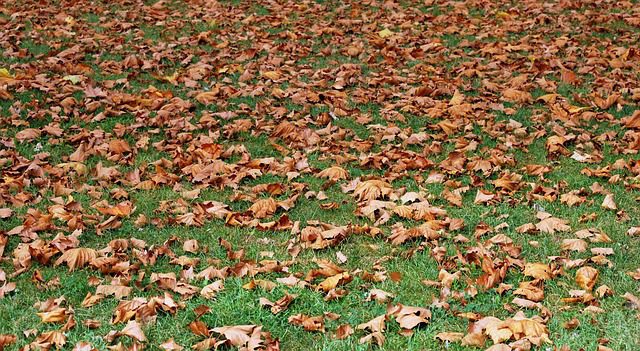
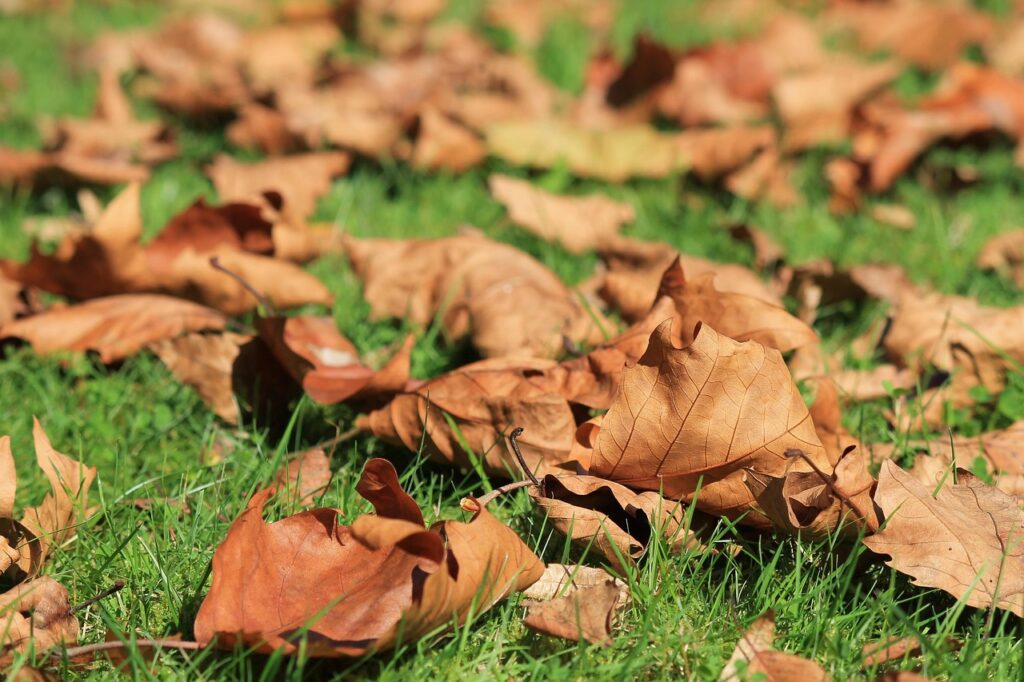
Fallen leaves aren’t necessarily bad for your lawn. In moderation, they can provide valuable organic matter that benefits the soil. However, allowing thick layers of leaves to accumulate can create problems for your turfgrass.
When leaves form a dense, wet blanket over your lawn, they can:
- Block sunlight: Grass needs sunlight to continue photosynthesis and store energy before
winter.
- Restrict airflow: Heavy leaf coverage traps moisture and creates conditions favorable for
certain fungal diseases.
- Smother grass: Thick, matted leaves can weaken turf and contribute to thin or bare
patches.
- Interfere with lawn treatments: Dense leaf coverage can prevent fertilizers and other
lawn care products from reaching their intended targets.
That’s why effective fall leaf management for lawns focuses on maintaining a balance between recycling leaves and keeping your grass exposed to sunlight and air.
When Should You Mulch Leaves Instead of Raking?
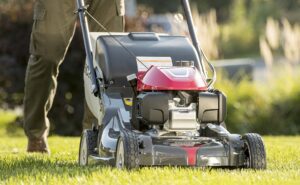
For most Indiana homeowners, mulching leaves with a lawn mower is one of the best ways to manage light to moderate leaf coverage.
Rather than collecting leaves and hauling them away, a mulching mower chops them into small pieces that settle between grass blades. Over time, soil organisms break down those fragments, returning organic matter and nutrients to the soil.
Benefits of Mulching Leaves
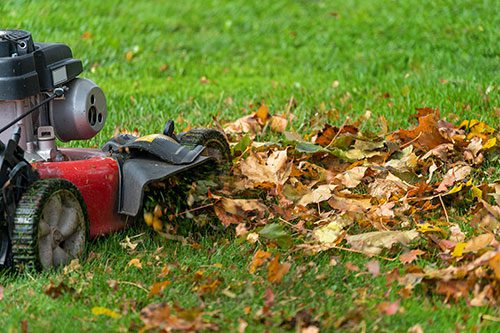
Mulching provides several advantages for your lawn:
- Returns nutrients and organic matter to the soil.
- Supports beneficial earthworms and soil microorganisms.
- Helps improve soil structure over time.
- Reduces the amount of yard waste sent to landfills.
- Saves time compared to repeatedly raking and bagging leaves.
For the best results, use a mower equipped with mulching blades and mow when leaves are relatively dry. You may need to make multiple passes to chop them into sufficiently small pieces.
A good rule of thumb: If you can still see plenty of green grass through the shredded leaves, and the fragments aren’t forming a thick layer, mulching is generally a good option.
However, if the shredded leaves completely cover the grass, it’s time to collect some of the excess.
When Is Raking or Leaf Removal Necessary?
Although mulching is beneficial, there are situations when removing leaves is the healthier choice.
If your yard has several mature trees, you may experience heavy leaf accumulation throughout October and November. Large piles can overwhelm your mower and prevent shredded material from filtering down into the turf.
Consider raking or removing leaves when:
- Leaves completely cover the lawn in a thick layer.
- Wet leaves become matted together.
- Your mower cannot adequately shred the accumulated leaves.
- Grass remains hidden beneath leaf coverage for extended periods.
- Leaves collect heavily in shaded areas, along fences, or near landscape beds.
You don’t necessarily need to remove every leaf. Instead, focus on reducing excessive coverage so your grass can continue receiving sunlight and air.
Collected leaves can also be composted or used as mulch in appropriate landscape beds, keeping valuable organic material on your property.
Can Lawn Treatments Still Be Applied When Leaves Are Present?
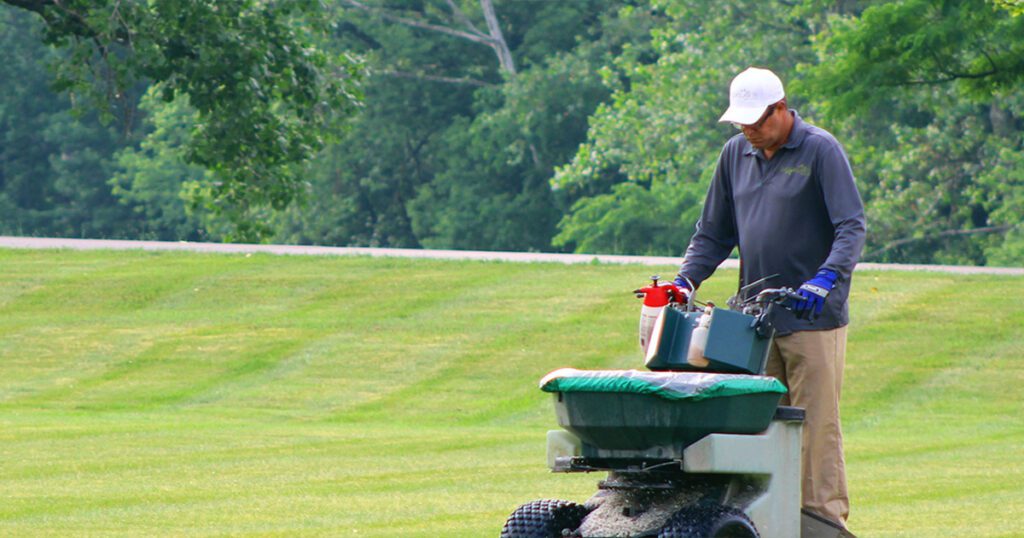
One common question homeowners ask is whether fallen leaves interfere with scheduled fall lawn treatments.
The answer depends on the amount of leaf coverage and the type of treatment being applied.
Light, scattered leaf coverage generally isn’t a major concern, especially when enough turf remains exposed for the application. However, heavy layers of leaves can prevent granular fertilizer from reaching the soil or interfere with products that need direct contact with grass or weeds.
At Brooklawn Services, we encourage homeowners to keep up with leaf management throughout the fall, particularly when lawn treatments are scheduled.
Removing excessive leaf coverage helps ensure treatments reach their intended targets and supports the effectiveness of your lawn care program.
Don’t Stop Mowing Just Because Leaves Are Falling
Another important part of fall leaf management for lawns is continuing to mow while your grass is actively growing.
Indiana’s cool-season grasses, including Kentucky bluegrass, tall fescue, and perennial ryegrass, often experience renewed growth during cooler fall weather.
Continue mowing as needed, removing no more than one-third of the grass blade at a time.
Regular mowing also provides opportunities to mulch newly fallen leaves before they accumulate.
Combining consistent mowing with proper leaf management helps your lawn enter winter in better condition.
Give Your Indiana Lawn a Healthier Start Next Spring
Fall lawn care doesn’t end when the leaves begin falling. The steps you take now can influence how well your grass survives winter and rebounds when warmer temperatures return.
By mulching leaves when possible, removing excessive buildup, and keeping up with seasonal lawn treatments, you can protect your investment and encourage stronger turf next spring.
At Brooklawn Services, we’re here to help homeowners throughout Muncie and surrounding Indiana communities maintain healthy, beautiful lawns through every season.
Have questions about fall lawn care or preparing your grass for winter? Call Brooklawn Services at (888) 794-9555 to learn more about our professional lawn care programs and how we can help your lawn thrive.